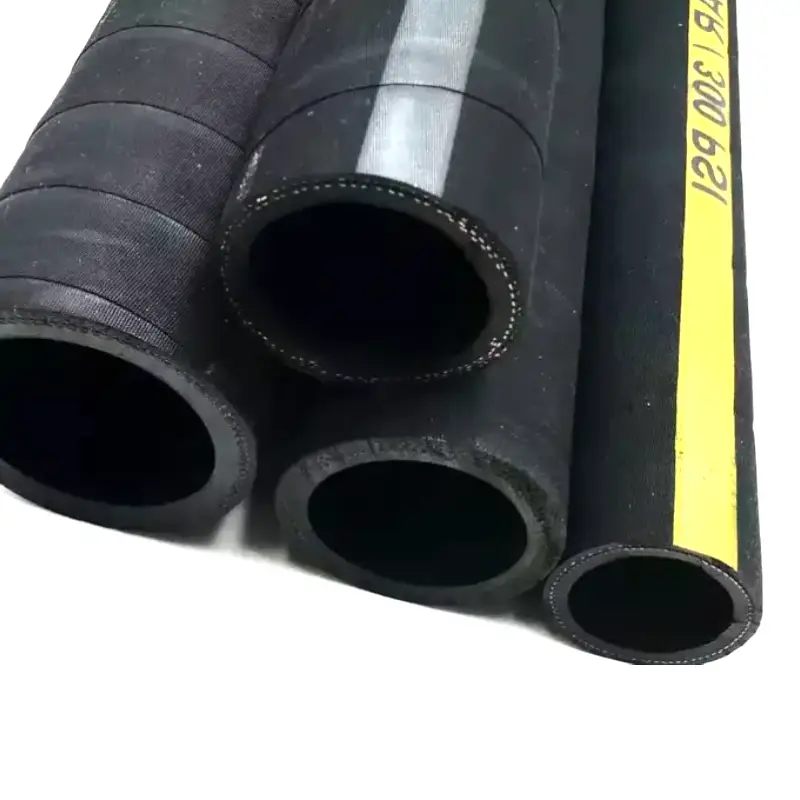
Premium hydraulic hose manufacturers manage bulk orders through a combination of production planning, material control, quality inspection, and logistics coordination. A large order of 50,000 hydraulic hoses may involve multiple production lines, hundreds of inspection records, and delivery schedules covering several months. Manufacturers with mature systems can maintain batch consistency above 95% while meeting strict industrial standards such as SAE and ISO requirements.
Large-volume hydraulic hose orders require detailed planning before production begins. Industrial customers usually provide specifications including hose type, pressure rating, temperature range, length, fitting style, and application environment. A supplier producing hoses for construction equipment may handle SAE 100R1, SAE 100R2, SAE 100R12, or SAE 100R13 models, with working pressures commonly ranging from 1,000 psi to more than 5,000 psi.
A bulk order is managed as a complete production project, not as a simple request for a large quantity of products.
Manufacturers first review customer demand and divide the order into production batches. A 100,000-piece order may include different diameters, assemblies, and delivery dates. Production teams usually create schedules based on machine capacity, material availability, and shipping requirements. Many factories use ERP systems introduced during the 2010s to connect purchasing, manufacturing, inventory, and delivery information.
The planning process affects every later stage because raw material preparation depends on accurate production forecasts. Hydraulic hose production requires rubber compounds, steel wire reinforcement, textile layers, and metal fittings. A factory producing 500,000 meters of hose annually may need several hundred tons of rubber materials and thousands of kilometers of reinforcement wire.
Material quality control starts before manufacturing. Premium suppliers test incoming materials through checks such as rubber hardness, tensile strength, wire diameter measurement, and chemical composition analysis. For example, steel wire used in high-pressure hoses must maintain consistent strength because reinforcement quality directly affects pressure resistance.
Manufacturers often work with approved suppliers and maintain material records for each production batch. These records help factories identify the source of materials used in a specific order. Since hydraulic hoses are safety-related components, many industrial buyers require full traceability according to quality systems such as ISO 9001, which has been widely adopted by manufacturers since its first release in 1987.
After material preparation, production control becomes the next focus. Hydraulic hose manufacturing normally includes rubber extrusion, reinforcement braiding or spiral winding, cutting, assembly, vulcanization, and testing. Each process has specific operating requirements to keep product performance stable.
During extrusion, manufacturers control rubber thickness and surface quality. During wire reinforcement, machines maintain wire tension to achieve uniform pressure distribution. During vulcanization, temperature and curing time affect flexibility, strength, and resistance to aging.
Modern factories use automated equipment to improve consistency during high-volume production. Computer-controlled braiding machines can operate continuously with less variation compared with manual processes. Some production facilities can manufacture several thousand meters of hydraulic hose per day, depending on hose size and design.
These manufacturing steps create the foundation for quality inspection. Bulk orders require more than checking the appearance of finished products because hydraulic hoses must perform under high pressure and repeated movement.
Quality testing usually includes dimensional inspection, pressure testing, leakage checks, and impulse testing. Industry standards such as SAE J517 define requirements for different hydraulic hose categories. A hose rated at 4,000 psi working pressure may need to pass testing at significantly higher pressure levels before approval.
| Inspection Item | Purpose |
|---|---|
| Working pressure test | Confirms normal operating capability |
| Burst pressure test | Measures maximum pressure resistance |
| Impulse test | Evaluates durability under repeated pressure cycles |
| Dimensional inspection | Checks length, diameter, and fitting accuracy |
Manufacturers handling thousands of units also use sampling plans to maintain efficiency. Instead of testing every single product with destructive methods, factories combine full visual inspection with statistical sampling procedures. For example, an order of 20,000 assemblies may include hundreds of tested samples depending on customer requirements and industry standards.
Inspection data also supports customer communication. Large equipment manufacturers need reliable delivery information because hydraulic hoses are often used in assembly lines, maintenance programs, and replacement supply systems. A delayed shipment can affect equipment production schedules, so suppliers usually provide production updates during the order cycle.
Many companies now provide customized hydraulic hose manufacturing solutions for customers with different application requirements. These solutions may include custom hose assemblies, special covers for harsh environments, specific labeling, packaging requirements, and scheduled deliveries.
Customization requires close technical communication between customers and manufacturers. Engineers review operating pressure, temperature conditions, chemical exposure, and installation space before production. For example, mining equipment often requires hoses with strong abrasion resistance, while agricultural machinery may need flexible hoses designed for frequent movement.
Once production is completed, packaging management becomes important for bulk shipments. Hydraulic hoses are usually packed in coils, cartons, pallets, or wooden cases depending on size and transportation conditions. Proper packaging prevents deformation and protects fittings during long-distance shipping.
International orders require coordination between factories, freight companies, and customs services. A shipment containing 30,000 hydraulic hose assemblies may be divided into several containers to match customer storage capacity. Export documents, inspection certificates, and product information must be prepared before shipment.
Logistics planning is connected with inventory management. Some large customers prefer suppliers to maintain stock levels for frequently used hose models. Vendor-managed inventory programs became more common after 2015 because they allow manufacturers and customers to coordinate supply schedules more efficiently.
Data management supports these long-term relationships. Manufacturers track order history, production records, inspection results, and delivery performance. These records help suppliers improve future production planning and reduce repeated communication during regular orders.
Customer support continues after delivery. Premium suppliers often provide technical guidance regarding hose installation, replacement intervals, and application conditions. For industries such as mining, agriculture, and construction, correct hose selection can influence equipment reliability because hydraulic systems often operate under continuous pressure.
A reliable bulk order process combines accurate planning, stable manufacturing, detailed inspection, and organized delivery management.
Manufacturers that supply global industrial customers usually invest in production technology, quality systems, and supply-chain coordination. Since the hydraulic hose industry serves equipment that may operate for thousands of hours each year, customers typically evaluate suppliers based on consistent product quality, delivery ability, and technical support rather than production volume alone.